
 7 Morning Habits To Win The Day - PDF
 Productivity For Procrastinators - PDF
 Boosting Productivity - PDF
 Achieving Your Dreams - PDF
How to Become a Freelance Writer in 2026: A Proven Step-by-Step Guide

Wondering how to become a freelance writer, even with no experience? This step-by-step guide shows you how to choose a niche, build a portfolio, set your rates and land your first clients. It is one of our most practical guides to make money online.
Do you need an English degree, Pulitzer Prize, or 10,000 social media followers before clients will pay for your words? No. Strong writing can start with skills you already have, plus steady practice and clear services.
Freelance writing can grow into paid work, but results vary. One Upwork author earned $10,000 on the platform in 2018, then more than $300,000 over time. That story shows what may be possible; it does not promise quick income.
This guide covers practical steps: pick a niche, create writing samples, pitch clients, and build habits that support steady work. You can also draw on skills from another job. People have moved from teaching, tech support, and marketing into paid writing roles.
Alongside client jobs, the guide explores publishing options, grants, and residencies. Whether you want side income or a lasting career, these ideas can help you choose your next step and find your place in the world of writing.
Key Takeaways
- Degrees and large social followings are not required to start.
- Income can grow over time, though results differ for each person.
- Choose a niche and prepare strong samples.
- Pitching and steady business habits can help attract clients.
- Past work experience may support your shift into writing.
- Explore client work, publishing, grants, and residencies.
How to become a freelance writer: Start with the essentials
You do not need formal credentials before taking your first step. Clear communication, determination, curiosity, and steady practice can help you build useful writing skills.
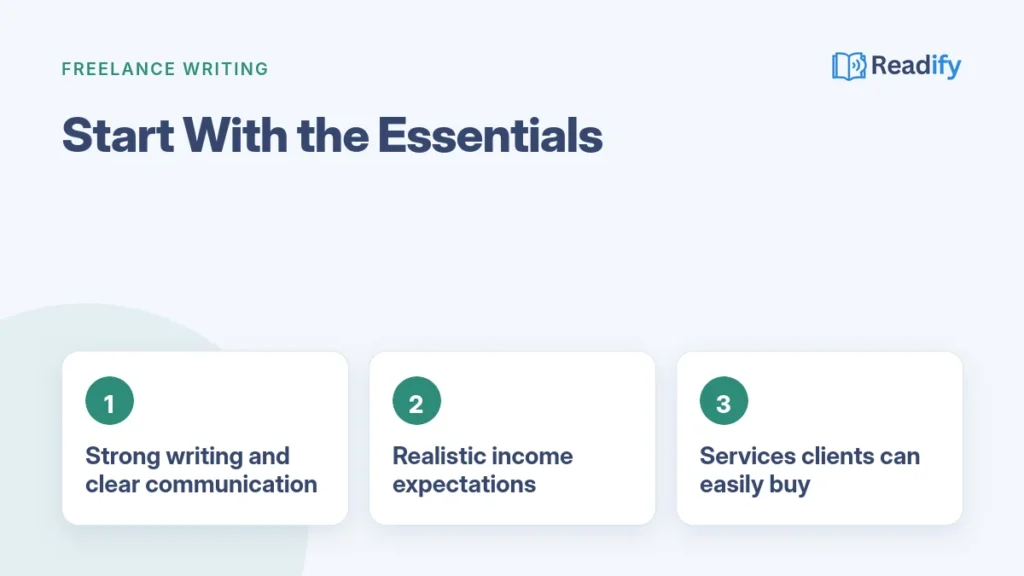
Build a strong foundation in writing and communication
A solid command of English helps you shape clear, useful content. Stay open to feedback and keep learning. A degree or certificate is not required; clients often care more about relevant samples and reliable work. One screenwriter noted that clients focused on the work, not a degree.
Set realistic expectations for your freelance writing career
Paid projects may take time to find, and income can vary. Treat freelance writing as a business from the start: track income and expenses, set deadlines, and prepare an invoice template. These habits make each client relationship easier to manage.
Even with success in another field, you may feel like a beginner again during a career change. Use a practical learning plan, practice often, and review your progress. These steps can help a freelancer move from introductory writing jobs toward lasting work in the world of writing.
Turn your background and experience into a writing advantage
Past roles can give you useful subject knowledge. One web developer began freelancing in 2011, started writing online in 2019, then found writing gigs in 2020. That path shows how career skills can open doors in the freelance writing world.
If you are wondering how to become a freelance writer without a writing degree, start with what you already know. Teachers, nurses, developers, accountants and salespeople all have subject knowledge that clients pay for. List three topics you could explain better than most people, and use them as the base of your first samples.

Industry experience helps writers grasp technical language and explain complex ideas in clear terms. This can make your pitch more useful to clients. Instead of treating a career change as a setback, show how your background can help solve the client’s needs.
For example, the developer wrote four pieces for a startup in Finland on bootstrapping and venture-capital funding. His first writing project paid $750 for roughly 1,500–1,600 words. Relevant knowledge can give any freelance writer a stronger case, even when entering a new niche.
Frame your experience around the topics and work each client needs. That link between past skills and business goals can help people see your value in the wider world of content.
| Experience | Writing opportunity | Client value |
|---|---|---|
| Web development since 2011 | Online writing from 2019; gigs in 2020 | Clear explanations of technical ideas |
| Startup project in Finland | Four pieces on bootstrapping and venture capital | Relevant insight for an industry audience |
| First paid project | $750 for about 1,500–1,600 words | Proof that transferable skills can support paid work |
Choose a profitable niche that leaves room to grow
Your strongest niche often sits where your knowledge meets a real client need. It can guide your early projects without locking you into one subject for your whole career.
Match your interests and expertise with client needs
For a freelance writer, familiar subjects can reduce research time and support stronger pitches. A broad interest in sports, for example, may stand out when focused on athletic training or injury prevention and rehabilitation.
Look for useful overlap:
- Topics you know or enjoy
- Content clients need
- Industries with paid projects
Explore related topics as you gain experience
Two 2,000-word assignments can demand very different research. An article about bootstrapping a startup may feel more familiar than one on Alzheimer’s neuroscience. That gap can affect research time, scope, and pricing. Set fees based on the work involved, not word count alone.
Grant writing also serves more than nonprofits. Startups, schools, and creative collectives may need help finding funding. Begin with one clear niche, then explore related topics as your skills grow. This focused path can help you become freelance while keeping your business flexible. Freelance writing can support a career that expands with your experience.
Develop the writing skills clients value
Strong writing comes from close reading, careful research, and steady revision. These habits help writers shape useful content and meet client needs.
Study strong articles, headlines, and content structures
Read blog articles with a curious eye. Notice headlines, opening hooks, subheads, calls to action, and voice. These parts reveal why some posts hold attention and guide readers through each idea. Read beyond craft manuals, too. Daniel Kahneman’s Thinking, Fast and Slow, Ernest Hemingway’s work, and books by Nassim Taleb offer lessons in clear ideas and strong arguments.
Practice researching, fact-checking, and editing your work
Research matters, especially when an assignment covers an unfamiliar niche or industry. Check names, dates, claims, and sources before delivery. These skills strengthen samples and support reliable freelance writing.
Feedback is part of the process. One account reports drafts returning with 10–50 comments and edits, followed by two or three revision rounds. Self-edit first, then treat client notes as guidance. A freelance writer who revises with care can build trust and improve each piece.
| Practice | Focus | Benefit |
|---|---|---|
| Read closely | Headlines, hooks, structure, and voice | Clearer blog articles |
| Check facts | Claims, dates, and sources | More accurate work |
| Revise carefully | Self-editing and client feedback | Smoother final drafts |
How to become a freelance writer with no experience: build a portfolio first
Your portfolio can show your judgment before paid work begins. New writers do not need client assignments first; mock articles, practice rewrites, and personal essays can show skill and range. This step can support your career as you pursue writing jobs.
Create relevant samples for the projects you want
Prepare three to six polished samples that match the projects you hope to land. Choose formats that fit your goals, such as blog posts, web copy, or email content. Copy featured in a Coca-Cola advertisement can also serve as an example of strong portfolio work. Clear, careful presentation helps each piece stand out.
Make your best work easy to view and share
Give every item brief context: name its purpose, audience, and format. Then add a simple link that opens without a download. A professional website or accessible portfolio page lets clients review your work with ease. Freelance writing samples can reflect your skills and business focus, even before you have experience. For any freelance writer, an organized portfolio offers clients a quick view of relevant projects and helps make your next career step easier.
Publish your writing to gain experience and visibility
Publishing in public gives each writer room to test voice, structure, and subject focus before client assignments arrive. Regular posts can build useful samples and show clients your judgment.
Use a blog or writing platform to develop your voice
Substack offers free, simple publishing; LinkedIn supports articles and short updates. These platforms let writers share niche knowledge where professional readers already spend time. Choose topics tied to your field, then use each post to practice clear openings, useful detail, and strong endings.
One author began publishing on Medium in 2019, using freelance writing to test subjects and styles. In March 2020, a startup in Finland offered this freelance writer paid work: four pieces on bootstrapping and venture-capital funding. Public writing can raise visibility, though it does not promise results.
Build rhythm, not viral reach. Share relevant posts through social media, and keep your blog on your website if useful. This steady marketing habit helps people find your work without constant promotion.
| Platform | Useful format | Example benefit |
|---|---|---|
| Substack | Free publishing | Practice voice and share samples |
| Articles and updates | Reach professional readers | |
| Medium | Topic experiments | May attract client opportunities |
Create a professional writer website and brand
Your online presence should make your value clear before anyone sends an inquiry. Use one central website for samples, service details, and contact information. Clients can review your work in one place and decide if your services fit their needs.
Keep your identity consistent across your website and social media. Choose a name, tone, and visual style that match the writing you offer. Simple menus and direct sample links help visitors browse without downloading files or losing interest.
A self-hosted blog offers more control than third-party platforms. You can review analytics, see which search terms bring visitors, collect email signups, and manage publishing. These insights can guide marketing choices as your business grows.
Treat your site as a practical tool, not a one-time task. Add strong samples as your experience grows. For freelance writing, this hub can help writers build trust and support a freelance writer’s professional brand.
| Website feature | Purpose | Visitor benefit |
|---|---|---|
| Work samples | Show writing skills and content range | Quick review of relevant work |
| Service and contact pages | Explain offers and provide contact details | Clear next step for clients |
| Self-hosted blog | Track visits and collect email signups | More control over publishing insights |
Set freelance writing rates that support your business
Rates should reflect effort, skill, and risk—not word count alone. Freelance writing fees vary by format, subject, and client needs, so treat published figures as guides, not promises.
To get a realistic view of the market, look at the writers and authors data from the U.S. Bureau of Labor Statistics, which covers pay, work environment and job outlook. It is a useful benchmark when you plan how to become a freelance writer who earns a sustainable income, even if freelance rates vary a lot from one niche to another.
Compare project-based, hourly, and per-word pricing
Project fees suit defined content assignments, while hourly pricing can fit work with an uncertain scope. Per-word rates remain common for publication jobs. One beginner guide cites $50–$150 per article or $20–$40 per hour. Established content writers may charge $0.10 to more than $1 per word.
| Pricing model | Useful for | Example benchmark |
|---|---|---|
| Per word | Publication work | $0.20–$1.00; $0.30–$0.40 is cited as common |
| Hourly | Open-ended projects | $20–$40 per hour for beginners |
| Project | Defined scope and deliverables | $50–$150 per article for beginners |
One freelance writer earned $750 for an initial story of about 1,500–1,600 words. That example shows why rates can differ; it does not set a standard for every job.
Account for research, revisions, and business expenses
Price research and revision time realistically. Some assignments receive 10–50 edits and need two or three revision rounds. Clarify revision limits with each client. Include unpaid admin time and business costs, such as software and taxes, when setting fees. This helps writers protect their workload and build a sustainable business.
Write pitches that help potential clients say yes
Pitch before every detail feels perfect. Editors, founders, and prospective clients need a brief reason to notice your message—not your full career story. In freelance writing, thoughtful outreach can open doors while your portfolio is still growing.
Personalize your message and keep it concise
Show that you understand the organization’s audience or recent work. Name one need you can address, then explain the value you bring. A short, specific note feels more relevant than copied text sent to many clients.
Introduce yourself, state your offer, and keep background details brief. Searches for “become freelance writer” point to a goal, not a pitch template. A focused message gives editors and founders room to assess your fit.
Link to a relevant sample and make a clear offer
Include one direct link to related content or your portfolio. Choose samples that match the subject, format, or audience in the job listing. Make the next step clear, such as offering blog posts or marketing copy for upcoming projects.
- Reply to writing jobs with a tailored note.
- Contact media teams with a useful idea.
- Track each pitch and follow up with care.
Consistent pitching takes time. One author spent about a year reaching out before freelance work replaced a salary. Results vary, but steady effort can help writers build a business and find suitable jobs.
Find freelance writing jobs and reliable clients
Use several sources for paid work instead of relying on one feed. Check job boards, publications, freelance platforms, and direct listings from companies. Each channel can reveal different projects and help you build steady client relationships.
Explore job boards, publications, and platforms
Search writing job boards alongside magazines, business websites, and marketplace listings. One Upwork author earned $10,000 on the platform in 2018 and reports more than $300,000 in earnings since. That result shows potential, not a typical outcome.
CozyJobs is a remote-only board for freelance roles. It updates five times each week and offers featured clients, daily matches, and a free application tracker. Plans cost $19 monthly or $135 yearly. Compare the fee with your budget and expected use before subscribing.
Use referrals, networking, and direct outreach
Job boards are only one route. Networking with other writers can lead to advice, referrals, and projects. Direct pitching can also connect your skills with client needs.
- Save promising writing jobs from several sources.
- Build relationships with people in your industry.
- Contact relevant publications and businesses directly.
These steps can broaden opportunities and support your career over time.
Evaluate opportunities and avoid underpaid work
A tempting listing can still cost more time than it pays. In freelance writing, check pay, scope, deadlines, and fit before you accept.
One listing offered $20 for 2,000 words. That equals just one cent per word, before research or revisions. Some free gig feeds also feature assignments below $0.10 per word. Better potential clients exist, so compare the offer with your needs.
- Confirm pay and deliverables before you agree.
- Check that deadlines leave room for careful work.
- Estimate time for research, drafting, and edits.
- Choose projects that match your goals.
For any freelance writer, a quick time estimate can reveal the true rate. Consider whether the client values your skill and offers clear terms. Declining exploitative work protects time for stronger writing jobs and sustainable business growth. Writers can focus on useful things, not just available jobs. A low-paid writing job may look like progress, but fair pay helps make writing work viable.
| Listing detail | Warning sign | Better standard |
|---|---|---|
| Pay | $20 for 2,000 words | Clear rate that fits the effort |
| Scope | Vague deliverables | Defined length and revision limits |
| Deadline | Little time for research | Reasonable schedule for quality work |
Manage client projects, time, and business systems
A scattered inbox can turn routine projects into avoidable stress. Strong freelance writing systems keep details visible and help each freelancer run business tasks with less effort.
Track pitches, deadlines, invoices, and income
Record pitches, project status, deadlines, invoices, and income in one reliable system instead of trusting memory. Set up a pitch tracker, invoice templates, and a Notion dashboard early.
| Tool | Use | Benefit |
|---|---|---|
| Pitch tracker | Log leads and follow-ups | Shows next steps |
| Notion dashboard | List deadlines and project status | Keeps tasks visible |
| Invoice template | Record charges and payments | Supports clear records |
Set a work schedule and protect time for writing
Block regular writing hours, then leave room for client feedback. Drafts may get 10–50 comments and edits, followed by two or three revision rounds. Plan for those changes before accepting each job.
These habits help writers manage clients, content, and multiple projects with professional communication. They also protect paid work and build skills for a lasting freelance writing career. Keep blog and website tasks inside set hours. Each freelance writer can use this simple structure to support a writing career and meet commitments.
Build relationships with writers, editors, and clients
Conversations with editors and peers can sharpen daily work. Ask about research sources, pitch timing, headline choices, and clear client updates. Practical answers may save time and prevent revisions. These connections also make writing feel less isolated.
One author used Twitter to connect with peers and learn from their experience. Those exchanges offered ideas for research, pitching, and client communication. Later, professional contacts led to referral projects, rather than relying only on formal applications.
Publishing helped turn visibility into opportunity. After sharing work on Medium, the author received an offer in March 2020 for four pieces for a startup in Finland. Public samples and trusted contacts can work well together.
Each freelance writer can strengthen these ties by sharing useful leads and asking specific questions. Keep in touch with people who offer guidance. After projects end, send clients a brief thank-you and stay professional; steady contact can support future work without pressure.
- Share relevant leads.
- Ask focused questions.
- Check in after projects.
| Relationship | Useful exchange | Potential benefit |
|---|---|---|
| Peers | Research and pitching advice | Stronger writing craft |
| Editors | Headline and feedback insights | Clearer submissions |
| Clients | Professional follow-up | Future referrals |
Grow your career through continued learning and new opportunities
Career growth rarely follows one fixed path. Keep reading and exploring related subjects as your experience grows. Practice often, seek expert feedback, and use each lesson to sharpen your skills.
Expand your expertise and improve your craft
Study strong work, test new forms on your blog, and research topics near your niche. Fresh knowledge can help each writer serve clients with more confidence. These habits support your writing career and may reveal new job options.
Consider grants, contests, residencies, and agency work
Writing contests, project grants, and artist residencies may offer funding and protected time, beyond client assignments. One residency example gave its participant a summer in Berlin for focused creative work. Grant-writing clients can include nonprofits, startups, schools, and creative collectives. Agency work may also bring team experience and varied projects.
Freelance writing can take time to support full-time work. One coach reports that writers she coached reached that goal within six to eighteen months; her own path took about one year. Results vary, but steady steps can create more opportunities in the wider world of work.
As a freelance writer, keep learning while you build your career. No single timeline fits everyone.
Keep reading
- Hostinger vs Namecheap: where to host your writer website
- What is AI arbitrage? Use AI to scale your writing services
- How to improve brand visibility in AI search engines
Want to go further?
Download practical ebooks and audiobooks on productivity, online business and digital marketing in the Readify shop, or start with our free ebook.
Conclusion
Every lasting career starts with one useful step: create a relevant sample or send a focused pitch. For anyone learning how to become a freelance writer, pair past experience with clear communication and a focused niche. This mix helps clients see your value.
Now you know how to become a freelance writer: pick one niche, publish three strong samples and send your first pitches this week.
Build three to six portfolio samples, then publish useful work where readers can find it. Published pieces can lead to paid work, though results vary. This guide offers one practical way forward: set fair rates, track deadlines and income, and keep project terms clear. Beginner benchmarks include $50–$150 per article or $20–$40 per hour; adjust fees for scope and research.
Each freelance writer can keep learning and reach out each week. Every job can teach useful skills and reveal new jobs and opportunities. Steady effort, sound systems, and fair rates support a lasting writing career, even when progress takes time.
FAQ
How do I become a freelance writer with no experience?
Start with three to six sample articles in one niche, publish them on a simple website or a blogging platform, and pitch small businesses or publications that cover your topic. Your samples replace experience at the beginning.
How long does it take to become a freelance writer?
Many beginners land their first paid project within a few weeks to a few months, depending on how often they pitch and how focused their niche is. Consistent weekly outreach is the biggest factor.
Do I need a degree to become a freelance writer?
No. Clients care about clear writing, reliability and subject knowledge. A strong portfolio matters more than a diploma.
How much can a beginner freelance writer earn?
Beginner rates often range from $50 to $150 per article, and they grow as you specialize, collect testimonials and work with better clients.



3 Comments
Comments are closed.