
Best Productivity Books: 15 Top Reads to Work Smarter
You finish a busy day with messages answered, meetings attended, and the important task still untouched. The hours went somewhere, but progress feels hard to name. The best productivity books can help you make time for focused work and a life that feels less crowded by unfinished tasks.
These 15 picks address different needs, from organizing tasks to building habits and finding more meaningful work. No single book or system suits every person, and reading alone will not change a routine. You still need to test an idea against your real day, keep what helps, and leave the rest behind.
Key Takeaways
- Choose a book for the problem you face now, not for a perfect future routine.
- A capture system keeps tasks, ideas, appointments, and projects in one trusted place.
- Priorities, habits, and execution each call for different strategies.
- Protect time for work that supports your goals and responsibilities.
- Try one useful idea before adding another method or app.
The first group offers practical ways to get tasks and ideas out of your head and into a reliable system.
The 15 Best Productivity Books at a Glance
Here is the full list of the best productivity books covered in this guide, with the problem each one helps you solve.
| # | Book | Author | Best for |
|---|---|---|---|
| 1 | Getting Things Done | David Allen | Organizing tasks and projects |
| 2 | The Checklist Manifesto | Atul Gawande | Avoiding mistakes in complex work |
| 3 | Building a Second Brain | Tiago Forte | Organizing notes and ideas |
| 4 | Essentialism | Greg McKeown | Focusing on what matters most |
| 5 | Make Time | Jake Knapp & John Zeratsky | Choosing one daily highlight |
| 6 | The Effective Executive | Peter Drucker | Managing time by contribution |
| 7 | Atomic Habits | James Clear | Building small, lasting habits |
| 8 | The Power of Habit | Charles Duhigg | Understanding how habits work |
| 9 | The 12 Week Year | Brian P. Moran & Michael Lennington | Turning goals into weekly action |
| 10 | The 4 Disciplines of Execution | Chris McChesney, Sean Covey & Jim Huling | Team goals and accountability |
| 11 | The Now Habit | Neil Fiore | Beating procrastination |
| 12 | Someday Is Today | Matthew Dicks | Using small pockets of time |
| 13 | Move. Think. Rest. | Natalie Nixon | Balancing energy and rest |
| 14 | The 7 Habits of Highly Effective People | Stephen R. Covey | Long-term personal effectiveness |
| 15 | Flow | Mihaly Csikszentmihalyi | Deep focus and engagement |
Free Productivity Ebooks You Can Download Today
Want to start right now, before buying a book? These free Readify ebooks put the ideas from the best productivity books into short, practical PDF guides you can read in one evening.
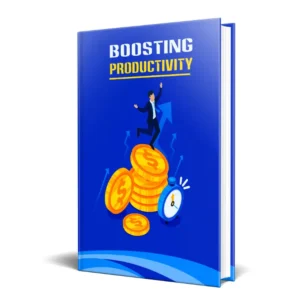
Boosting Productivity
Manage your time better, protect your energy and focus on what matters.
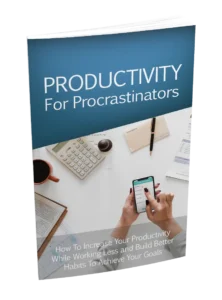
Productivity For Procrastinators
Beat procrastination and get more done while working less.
7 Morning Habits To Win The Day
7 simple morning routines to build discipline and focus.

See all free ebooks · Premium ebooks and audiobooks
Which Best Productivity Books Help You Build a Reliable System?
You remember a work task while driving home, then realize you never wrote it down. A trusted place to collect tasks, ideas, appointments, and projects lets you focus without relying on memory. That place is your capture system, and it can be a notebook, an app, or another tool you review regularly.
Three books offer different ways to keep details from slipping through the cracks:
- Getting Things Done by David Allen: The GTD method proposes collecting tasks, appointments, ideas, and projects in one system. When open loops have a home, they do not need to keep competing for attention.
- The Checklist Manifesto by Atul Gawande: Gawande argues that checklists provide a cognitive safety net for complicated work. A short list can help you catch a missed step during a process with many moving parts.
- Building a Second Brain by Tiago Forte: Forte presents a way to save and organize useful notes and ideas outside your memory. That can make information easier to find when you need it for a project.
A capture system works only if you can trust what it holds. That means setting a regular time to sort new items, clarify what each one means, and review what still matters. Writing a reminder as “call Sam about the venue” gives you more to act on than “Sam.”
A common mistake is collecting new apps and notebooks without reviewing them. More places to store information can create more places to check. Start with one system you can maintain, then adjust it if a real problem appears.
Organizing everything that needs attention is a useful start. The next challenge is deciding which tasks deserve attention first.
How Do You Choose Books on Productivity and Time Management?
A completely full day can still end without meaningful progress. Choose a time-management book that helps you tell important work from activity that merely fills your schedule. A task list is not a priority list, and treating the two as the same can leave your best work for later.
How Do the Best Books on Productivity and Time Management Help Protect Priorities?
Essentialism by Greg McKeown asks you to focus on what matters and cut back on lower-value commitments. It is not a call to do everything faster. Its central challenge is choosing fewer things deliberately, so your time and attention go toward work that matters.
Make Time by Jake Knapp and John Zeratsky offers a practical daily prompt: choose a highlight. A highlight is a daily priority that deserves protected attention. It might be drafting a proposal, finishing a difficult assignment, or spending time with someone important.
The point is not to pretend every other task disappears. Meetings, deadlines, and family responsibilities still need space. But when you name one priority, you have a clearer reason to protect a block of focus instead of letting every incoming request claim your best hours.
What Does It Mean to Manage Time by Contribution?
Peter Drucker’s The Effective Executive emphasizes tracking where time goes, focusing on contribution rather than activity, and using strengths. Those ideas help you ask whether your work makes a useful difference, not just whether you stayed busy. The answer can change what you choose to do next.
Separate fixed appointments from discretionary tasks. An appointment has a set time, such as a scheduled meeting or class. A discretionary task can move, shrink, or be dropped. Drucker’s attention to actual time use helps you see where the flexible hours go before you promise them away.
Try comparing your planned schedule with how the day actually unfolded. If a task repeatedly pushes out your highlight, decide whether it truly belongs in your day. Once you choose the right work, repeatable routines can make it easier to start and finish.
Which Books Can Help You Build Better Habits?
You plan to review tomorrow’s work each evening, but the routine keeps getting postponed until you feel more motivated. Useful habits are easier to repeat when the routine is clear and fits your real day. Two well-known books approach that challenge from different angles.
Free ebook: put better habits into practice tomorrow morning with 7 Morning Habits To Win The Day.
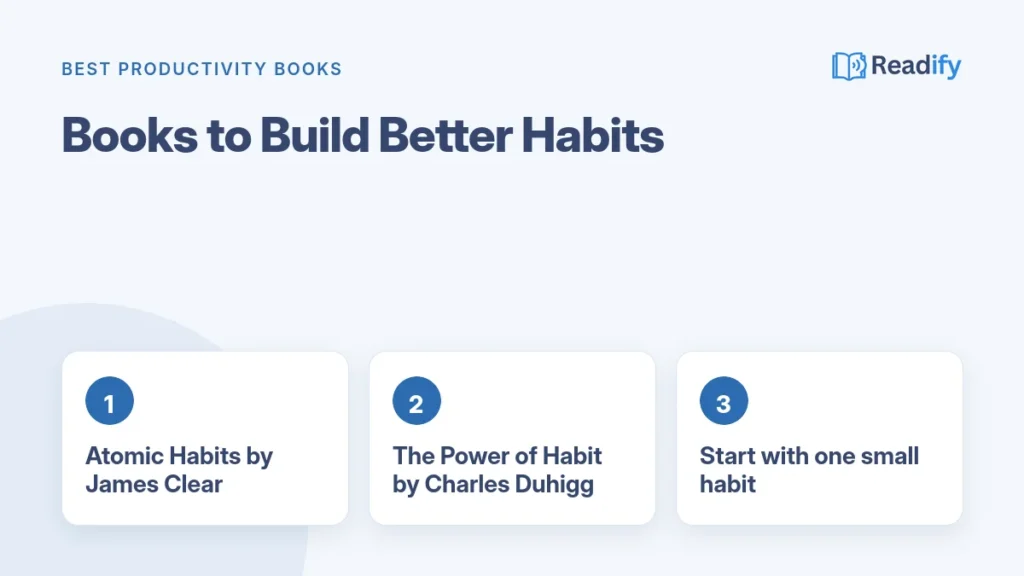
- Atomic Habits by James Clear: Clear emphasizes small changes and systems over relying on goals alone. For a planning routine, you might leave your calendar open beside the place where you make coffee. The cue makes the next action easier to remember and begin.
- The Power of Habit by Charles Duhigg: Duhigg examines how habits affect everyday behavior and organizations. The book can help you notice patterns in a workday, including routines that support useful focus and those that pull attention away.
A routine does not need a grand redesign to become more dependable. If you want to plan tomorrow each evening, start with a short list of the next day’s essential tasks. Keep the list small enough to complete when you are tired, then add detail only when it helps.
James Clear’s system-first emphasis can be useful when you are tempted to set a big goal and wait for inspiration. A goal can point you toward a result, while a repeatable process gives you something concrete to do today. Make the process simple enough to survive a busy week.
Do not treat a missed day on a habit tracker as proof that you have failed. A missed mark is information, not a verdict. Ask what got in the way, then decide whether the cue, timing, or task needs to change. Established routines can then support visible progress toward larger goals.
Which Books Turn Goals Into Consistent Execution?
A project can remain important in theory while routine work keeps it from moving. Execution books help connect larger goals to actions you can track during an ordinary week. The 12 Week Year and the 4 Disciplines of Execution offer two structured approaches.
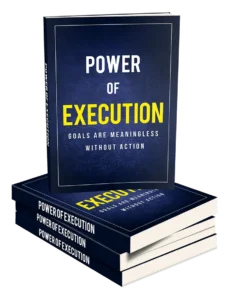
Free ebook: turn your goals into results with Power Of Execution and Achieving Your Dreams.
- The 12 Week Year by Brian P. Moran and Michael Lennington: It organizes execution around a 12-week cycle instead of a one-year cycle. A shorter planning period can make a distant goal feel close enough to shape this week’s work.
- The 4 Disciplines of Execution by Chris McChesney, Sean Covey, and Jim Huling: The 4DX method centers on four disciplines: choose a wildly important goal, track lead and lag measures, use a visible scoreboard, and hold a weekly accountability meeting.
A lag measure records an outcome, such as revenue earned or a project completed. A lead measure is an action you can influence, such as making a set number of customer calls or drafting a section each week. Both can matter, but they answer different questions.
In 4DX, the wildly important goal gives the team a clear focus amid routine demands. Lead measures connect daily work to that goal. A visible scoreboard shows whether the team is acting on those measures, and a weekly accountability meeting gives people a chance to report commitments and adjust.
A common mistake is tracking an impressive final result without choosing an actionable lead measure. You may care about a finished report, but “finish the report” gives little guidance if no one has broken the work into steps. Pick a measure you can influence, then review it honestly.
The 12-week cycle can also help you avoid postponing an important project until the end of a long annual plan. Keep the targets realistic for your available time. Once the goal and plan are clear, the next challenge is starting when avoidance gets in the way.
Which Books Offer Practical Ways to Beat Procrastination?
You delay a task because the workday you planned already feels impossible. To get started, choose a first step that fits your actual energy and schedule, rather than waiting for motivation to appear. Two books offer practical ways to make time feel more usable.
Free ebook: stop putting things off with Productivity For Procrastinators.
- The Now Habit by Neil Fiore: Fiore’s unschedule idea starts by booking guilt-free time off in advance. You add recreation and other personal commitments to a calendar, then fit work into the remaining open time. The approach aims to make work less of a constant threat to your day.
- Someday Is Today by Matthew Dicks: Dicks suggests noticing small pockets of time that can support modest steps. A few minutes might be enough to outline an idea, write a note, or prepare what you need for a later work session.
The unschedule is not a plan to fill every available hour with work. Put real time off on the calendar, then use the open spaces to begin tasks without pretending you have a perfect day ahead. If rest is absent, the schedule will feel like another demand.
Minute-counting helps most when the action is modest. If you have a short gap before an appointment, you might identify the next step in a project rather than expect to finish it. That small action can reduce the effort needed to return to the task later.
Notice what you tell yourself when you postpone work. “I need the whole afternoon” can make a task feel impossible, while “I can sketch the first paragraph” gives you a way in. Starting does not guarantee instant motivation, but it can break the cycle of waiting.
Do not build an unschedule that leaves no genuinely restorative time. A full calendar of work, errands, and self-improvement can still drain you. Once you have a way to begin, consider the energy you need to keep working well.
How Can Energy and Rest Support Better Work?
A day of continuous effort can leave you worn down, while a day with deliberate pauses can create room to recover. Sustainable productivity depends on energy and rest as well as hours worked. Paying attention to your routine can show you which activities drain you and which help you return to work with more capacity.
Free ebook: learn to protect your energy and focus with Boosting Productivity.
Move. Think. Rest. by Natalie Nixon focuses on everyday activities, a more balanced relationship with time, and stressing less while working productively. The book invites you to consider how movement, thinking, and rest fit into your work and life, rather than measuring a day only by how much you produce.
Concentrated effort and recovery serve different purposes. A focused stretch can help you make progress on a demanding task. A pause can help you reset before the next one. Notice the shape of your own day: which meetings leave you drained, and which activities help restore your attention?
You might find that a short walk between tasks helps you return with a clearer head. Or you may need quiet time after a meeting-heavy morning. Pay attention to what happens, rather than assuming a popular routine will work for you. Your energy patterns are more useful than a borrowed ideal.
Do not copy an athlete’s training schedule literally as a work plan. Athletic preparation has specific demands, and a desk job or caregiving day is different. You can borrow the broad idea that effort and recovery belong together without copying someone else’s schedule or workload.
Rest is not a prize you earn only after finishing everything. Work rarely reaches a final point where every task is done. A more balanced approach leaves room to recover while responsibilities continue. That view of sustainable energy leads to a bigger question: does your work align with your values and a meaningful life?
Which Books Connect Productivity With Meaning and Focus?
Achieving a result does not answer whether the result was worth pursuing. Meaningful productivity considers what your work contributes, not only how many tasks you complete. The 7 Habits of Highly Effective People and Flow offer lasting perspectives on effectiveness and attention.
What Makes the Best Productivity Books of All Time Endure?
Stephen Covey’s The 7 Habits of Highly Effective People emphasizes character before tactics. Its perspective on effectiveness goes beyond output: how you work and how you treat people matter alongside what you finish. That makes the book relevant when you are choosing how to use your time, not just trying to move faster.
Covey’s approach can prompt you to consider which responsibilities deserve a place in your life. Success is not simply a longer list of completed tasks. A person might finish more work while neglecting relationships or responsibilities that matter deeply. Output alone cannot tell you whether that trade was worthwhile.
How Does Flow Relate to Focused Work?
Flow by Mihaly Csikszentmihalyi explores the experience of deep engagement. The idea helps explain why some activities can hold your attention so fully that you become absorbed in the work. That experience offers a different way to think about focus, beyond counting hours or tasks.
Deep engagement can be satisfying, but it is not a test that every task must pass. A book about flow does not promise that every important task will feel absorbing. Scheduling, planning, and routine responsibilities can still matter even when they feel ordinary or take effort to begin.
You might find a rewarding stretch of focus while solving a hard problem, then face a less absorbing task that still needs care. Both have a place. Flow can be one sign that work engages you, but it does not decide whether a task is valuable or whether its result fits your goals.
Do not define success only by how many tasks you finish. Ask what those tasks support, and whether your time reflects what matters to you. With that wider view, it is easier to select a recommendation for the setting and responsibilities you actually face.
Which Productivity Books Fit Students and Workplace Readers?
A student with competing assignments and a worker coordinating a shared project face different productivity problems. Choose a book based on the challenge in front of you, since no title fits every student or workplace role. The most useful starting point depends on whether you need a better way to manage assignments, focus, execution, or teamwork.
What Are the Best Productivity Books for Students?
The best productivity books for students depend on the friction point. Consider Getting Things Done if assignments, appointments, and project details keep slipping from memory. Make Time may suit a student who knows the work but struggles to protect study focus. Atomic Habits may help when a study routine is hard to keep.
A student’s needs can shift between classes or during a busy term. A capture system might help with tracking deadlines, while a highlight can give a study session a clear purpose. A routine can help you return to that work at a regular time. Pick the challenge that causes the most trouble today.
Which Books Help With Workplace Success?
The best books for workplace success also depend on the job. The Checklist Manifesto may suit work that needs reliable execution across many steps. The Effective Executive can help you examine contribution and how you spend your time. 4DX may fit a team that needs shared goals and accountability.
Workplace success means different things for an individual contributor and a manager. An individual contributor may want to complete careful work and use strengths well. A manager may need a team to align on a priority and follow through. A book that serves one responsibility may not solve the other.
In a workplace, it can be tempting to add a new system for every project or team. Students can make the same mistake with separate planners and apps for each class. Do not add systems that create more upkeep than value. A simple approach that people actually use is often more useful than a complex one they avoid.
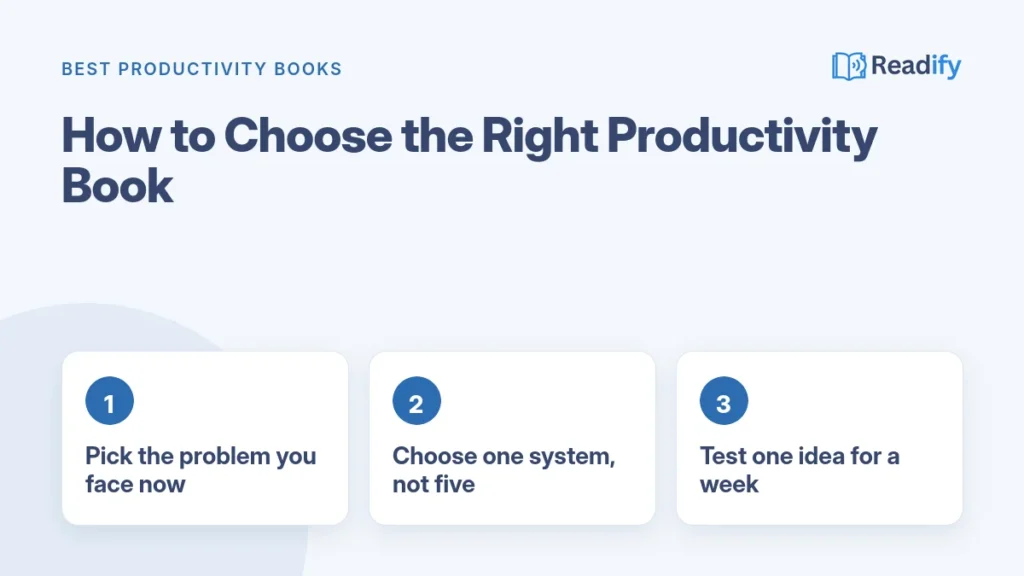
To choose a first book, name the problem you want to solve and match it to one recommendation. Try its advice before adding another system. That gives you a clear way to decide whether the book’s ideas fit your responsibilities and your real work life.
How Should You Choose and Apply a Productivity Book?
A reader can buy another title or try one idea already learned. Choose one current problem, test one practical idea for a week, and add another method only if you still need it. A top 10 best productivity books shortlist is most useful when its titles address different needs rather than repeat nearly identical advice.
A best selling productivity books label tells you that a title has sold well, not that it suits your work or goals. Sales rankings vary by retailer and date. A popular book may offer useful strategies, but your current challenge should guide the choice.
Read with one question in mind: what could make today’s work easier to start, finish, or sustain? Choose one idea that answers it, then try that idea during the coming week. Keep a short note about what changed and whether the new approach felt practical.
Buying several books at once can make a reading list grow without changing your day. If you choose to buy a title through an affiliate link, Readify may earn a commission at no extra cost to you. Its affiliate disclosure explains how those links work.
A perfect system is not the goal. One deliberate next step gives you a way to learn whether a book’s advice can help in your real routine.
Keep reading
Conclusion
Useful productivity advice starts with the problem you actually want to solve. The right book depends on your current obstacle, and applying one useful idea matters more than collecting advice you never test.
Not sure where to begin? Download a free Readify productivity ebook and test one idea this week.
Name one friction point in your day: perhaps a task keeps slipping, a priority gets crowded out, or a routine will not stick. Select one recommendation that addresses that problem and choose a single idea to try.
Give that idea a fair test during the coming week. Choose a title for the one problem you named, then see whether its advice makes your work or life a little easier to manage.
FAQ
What is the best productivity book for beginners?
Getting Things Done by David Allen and Atomic Habits by James Clear are two of the best productivity books to start with: the first helps you organize tasks, the second helps you build routines that last.
Which productivity book helps with procrastination?
The Now Habit by Neil Fiore focuses on procrastination and guilt-free planning. For a quick start, download our free ebook Productivity For Procrastinators.
How many productivity books should I read at once?
One at a time. Pick one idea, test it for a week, and keep only what works before moving to the next book.
Are there free productivity ebooks?
Yes. Readify offers free productivity ebooks in PDF on habits, focus, motivation and execution.
One Comment
Comments are closed.